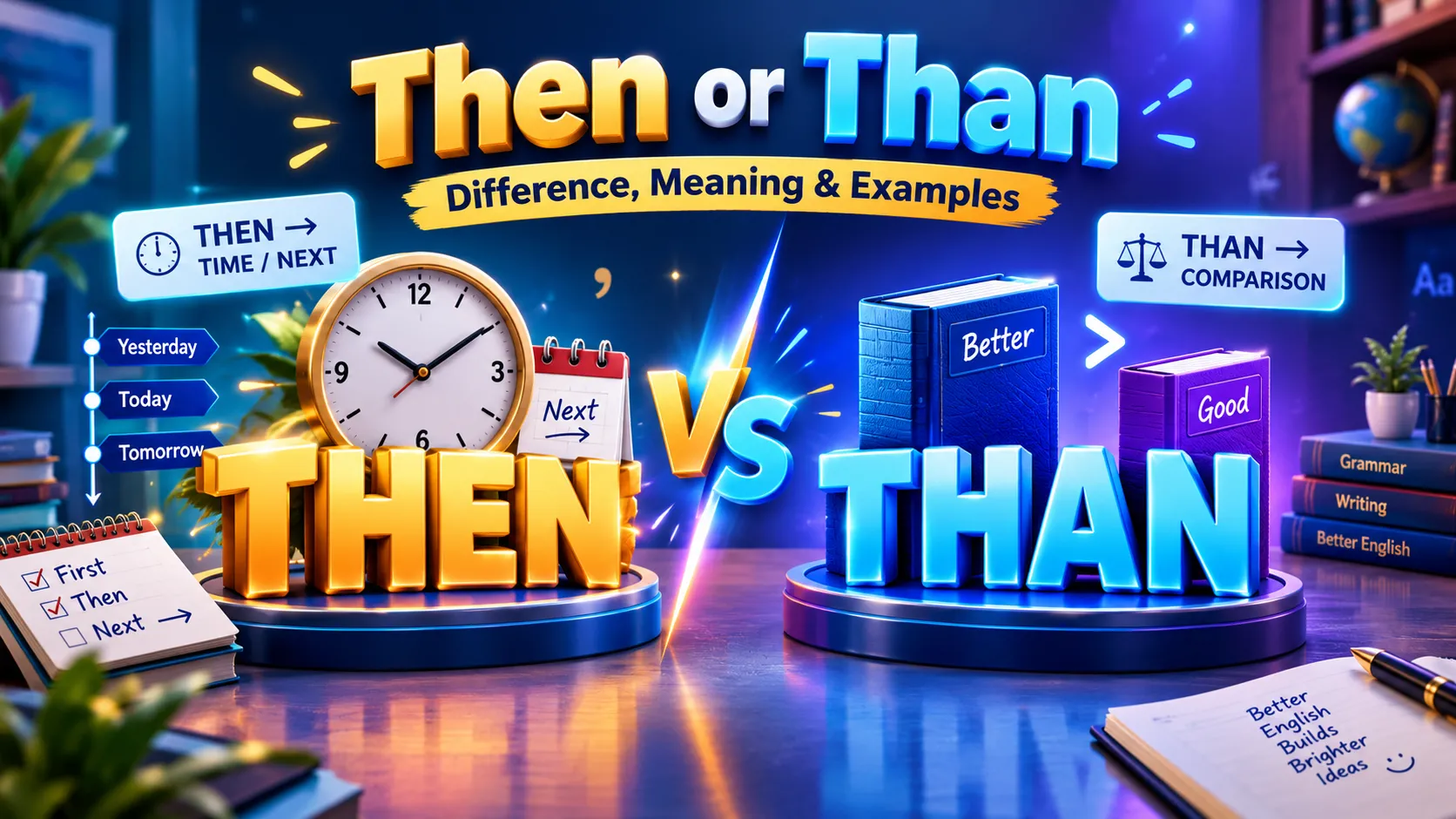
Then vs Than: Then and than look and sound similar, but they have completely different meanings and grammatical jobs. Then usually relates to time, sequence, or what happens next, while than introduces a comparison.
- Then = at that time, next, afterward, or in that case
- Than = used to compare two or more things
Example: I was younger then, but I am taller than my brother now.
This guide explains the difference between then vs. than, shows you how to use each word correctly, and gives plenty of examples to help you avoid this common mistake.
Then or Than: Quick Difference
| Word | Main Function | Meaning | Example |
| Then | Adverb | At that time; next; afterward | We ate dinner, then watched a movie. |
| Than | Conjunction/preposition | Used for comparison | Sarah is taller than Mia. |
The easiest way to remember the difference is:
Then = time or sequence
Than = comparison
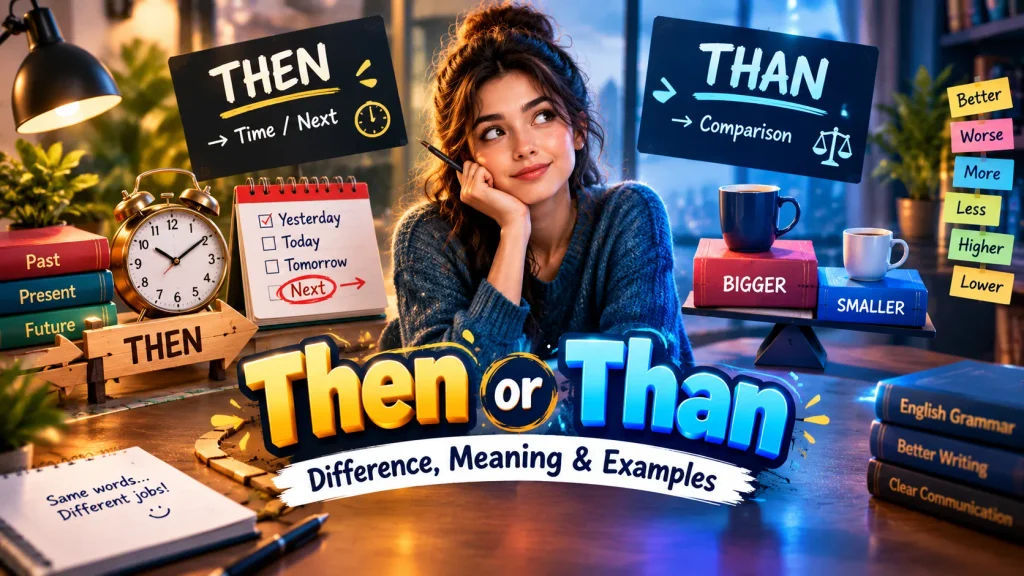
What Does “Then” Mean?
Then usually refers to a time, sequence, or consequence.
It can mean at that time, next, after that, or in that case, depending on the sentence.
1. Then Means “At That Time”
Use then when talking about a particular time in the past or future.
Examples:
- I lived in London then.
- We did not know each other then.
- She was only ten then.
- Things were different then.
- I will be busy then.
Here, then points to a specific time.
2. Then Means “Next”
Use then to show the next step in a sequence.
Examples:
- First, wash your hands, then prepare the food.
- Finish your homework, then you can play.
- We went to the restaurant and then walked home.
- Open the box, then remove the instructions.
- She took a shower and then went to bed.
In these examples, then means something like next or after that.
3. Then Means “Afterward”
Then can describe something that happens after another event.
Examples:
- We had lunch and then left.
- He finished his work and then called me.
- She graduated and then started her career.
- They visited Paris and then traveled to Rome.
4. Then Can Mean “In That Case”
Sometimes then means if that is true or in that situation.
Examples:
- If you are tired, then you should rest.
- If that’s your decision, then I respect it.
- If we leave now, then we can arrive before dark.
- If you don’t want it, then give it to someone else.
Explore More: https://wordminto.com/affect-or-effect/
What Does “Than” Mean?
Than is used when you compare people, objects, actions, quantities, or qualities.
It often follows a comparative word such as:
- better
- bigger
- smaller
- faster
- slower
- older
- younger
- more
- less
- fewer
- stronger
- easier
Examples
- My car is faster than yours.
- This test is easier than the last one.
- Emma is older than Jake.
- I have more books than you.
- This option costs less than the other one.
- Walking is healthier than sitting all day.
Whenever you are making a comparison, than is usually the correct choice.
Explore More: https://wordminto.com/borrow-or-lend/
Then vs. Than Examples
Compare these sentences:
Then
We finished dinner and then went home.
Here, then describes what happened next.
Than
My house is closer than yours.
Here, than introduces a comparison.
Another pair:
I was happier then.
Then = at that time.
I am happier than I was before.
Than = comparison.
Then or Than: How to Remember the Difference
A simple memory trick can make this distinction much easier.
Think “Time” for Then
Both then and time relate to events or moments.
Then → Time
If you are talking about when something happened or what happens next, use then.
First we eat, then we leave.
Think “Comparison” for Than
Than appears when you compare two things.
My laptop is faster than yours.
So remember:
Then = time/sequence
Than = comparison
Explore More: https://wordminto.com/layed-or-laid/
Common Uses of “Then”
Here are some of the most common ways to use then.
Then for Past Time
I was living in New York then.
Then for Future Time
I will call you then.
Then for Sequence
First, mix the ingredients, then bake the cake.
Then for Consequence
If you know the answer, then tell us.
Then for “After That”
She finished the book and then wrote a review.
Common Uses of “Than”
Use than when comparing:
People
John is taller than Mark.
Objects
This phone is cheaper than that one.
Actions
Running is harder than walking.
Quantities
We need more time than we expected.
Qualities
The new design is better than the old one.
Preferences
I would rather stay home than go out.
Explore More: https://wordminto.com/lay-or-lie/
Common Mistakes With Then and Than
Because the two words sound similar in casual speech, people often confuse them in writing.
Mistake 1: Using “Then” for a Comparison
❌ My car is faster then yours.
✅ My car is faster than yours.
The sentence compares two cars, so use than.
Mistake 2: Using “Than” for Sequence
❌ First, finish your work, than go home.
✅ First, finish your work, then go home.
The sentence describes what happens next, so use then.
Mistake 3: “Better Then”
❌ This version is better then the old one.
✅ This version is better than the old one.
Better than is a comparison.
Mistake 4: “And Than”
❌ We had dinner and than watched TV.
✅ We had dinner and then watched TV.
The second action follows the first, so then is correct.
Explore More: https://wordminto.com/sometime-vs-some-time/
Then vs. Than in Questions
The same distinction applies to questions.
Then
What happened then?
Here, then refers to a time or point in a sequence.
Than
Is this better than that?
Here, than introduces a comparison.
Then vs. Than in Everyday Sentences
Here are more examples:
- I was younger then.
- She arrived and then called me.
- This book is better than that one.
- He is taller than his brother.
- First, finish the report, then send it.
- I had more time then.
- This route is shorter than the other one.
- We ate breakfast and then left.
- My new phone is faster than my old one.
- If you agree, then we can start.
“Than” After Comparative Adjectives
One of the most important grammar patterns is:
Comparative adjective + than
Examples:
- taller than
- shorter than
- faster than
- slower than
- older than
- younger than
- stronger than
- weaker than
- easier than
- harder than
Examples
Maria is taller than Anna.
This exercise is easier than the previous one.
My new computer is faster than my old computer.
“Than” With More and Less
Than also follows more, less, fewer, and similar comparative expressions.
Examples
- I need more than five minutes.
- She earns more than I do.
- This costs less than $20.
- We received fewer than 100 applications.
- He spends more time studying than playing games.
“Then” in Instructions
Then appears frequently in instructions because it shows the order of actions.
Example
First, turn on the computer. Then, open your browser. Then, log into your account.
Here, each then tells the reader what to do next.
More examples:
- Add the flour, then mix everything together.
- Click the button, then select your account.
- Read the question, then choose the best answer.
- Save the document, then close the program.
Then vs. Than in Formal Writing
The distinction remains exactly the same in academic, professional, and formal writing.
Correct
The results were significantly higher than those reported previously.
The researchers collected the samples and then analyzed them.
Incorrect
The results were significantly higher then those reported previously.
The researchers collected the samples and than analyzed them.
Using the wrong word can change the grammatical meaning of the sentence.
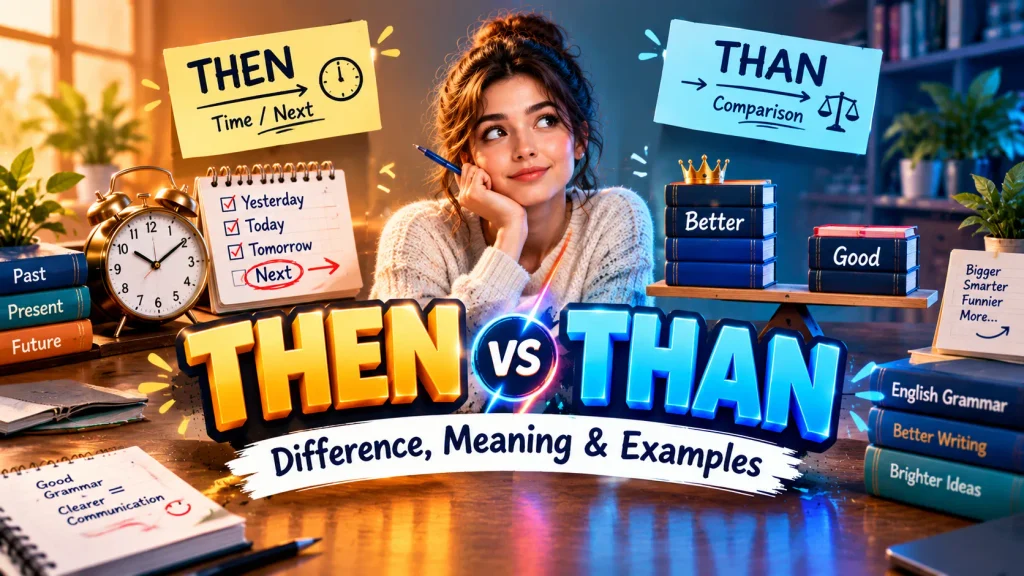
Then vs. Than: A Simple Test
When you are unsure, ask yourself a question.
Is the sentence about time or sequence?
If yes, use then.
We went shopping and then went home.
Is the sentence comparing two things?
If yes, use than.
Shopping online is easier than shopping in stores.
This quick test works in most everyday situations.
Then or Than: Practice Exercise
Choose then or than in each sentence.
- My brother is taller ___ me.
- We finished dinner and ___ watched a movie.
- I was much younger ___.
- This task is easier ___ I expected.
- First, read the instructions, ___ begin the exercise.
- She has more experience ___ I do.
- What happened ___?
- The blue car is faster ___ the red car.
- He took a shower and ___ went to bed.
- I would rather walk ___ wait for the bus.
Answers
- than
- then
- then
- than
- then
- than
- then
- than
- then
- than
Then or Than: Quick Comparison Chart
| If you mean… | Use |
| At that time | then |
| Next | then |
| After that | then |
| In that case | then |
| A comparison | than |
| More than | than |
| Less than | than |
| Better than | than |
| Faster than | than |
| Rather than | than |
People Also Ask
The correct phrase is better than.
This phone is better than my old phone.
Than introduces the comparison.
The correct phrase is first, then.
First, finish your homework, then watch TV.
Then shows the next step.
No. Than is the comparison word.
She is taller than me.
Then usually refers to time, sequence, or consequence.
No. Then is generally the time or sequence word.
We lived there then.
Remember:
Then = TimeThan = Comparison
If you can replace the word with next, after that, or at that time, you probably need then.
If you are comparing two things, you probably need than.
Yes.
Finish your work, then take a break.
Here, then means next or after that.
Yes.
The standard expression is rather than.
I would walk rather than drive.
Final Takeaway
The difference between then and than is simple once you focus on their functions.
Then relates to time, sequence, or consequence:
First we eat, then we leave.
Than introduces a comparison:
This restaurant is cheaper than the other one.
Remember the rule:
THEN = TIME / NEXT
THAN = COMPARISON
When you see a comparison such as better than, faster than, more than, less than, older than, use than.
When you describe what happened next, afterward, or at a particular time, use then.











1 thought on “Then vs Than: What’s the Difference? Meaning, Rules & Examples”