
FOMO Meaning: FOMO stands for Fear of Missing Out. It describes the feeling that other people are enjoying exciting experiences, attending special events, or discovering something interesting while you are not part of it.
People commonly use FOMO in text messages, group chats, Instagram comments, TikTok videos, and everyday conversations. For example, if your friends attend a concert without you, you might say, “I have serious FOMO right now!”
FOMO can describe genuine anxiety, mild regret, playful jealousy, or the desire to join an activity. Social media often makes this feeling stronger because people regularly see pictures and videos of other people’s experiences.
In this guide, you will learn what FOMO means, how to use it in texting, what it means on social media, and how it differs from related slang terms.
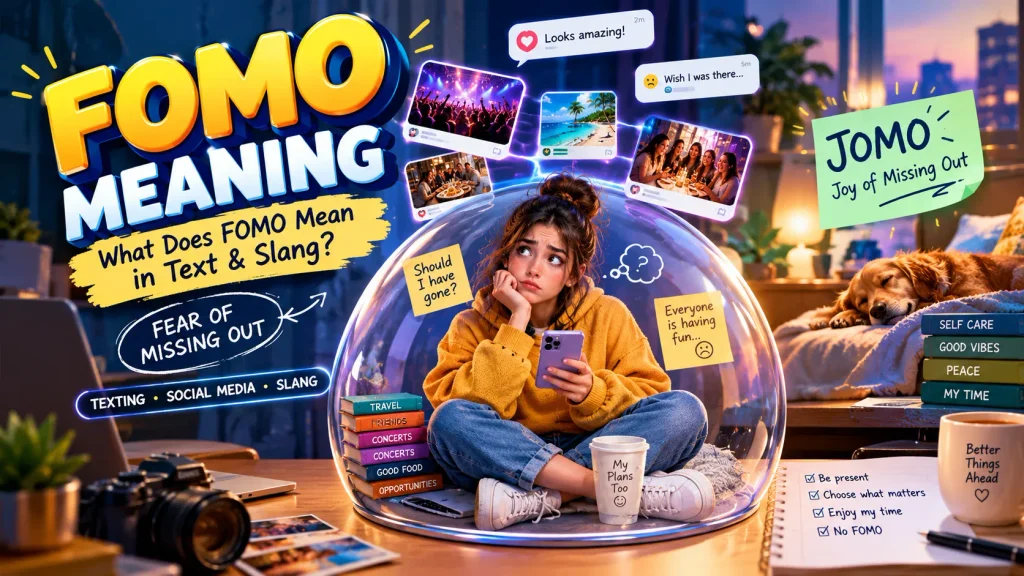
What Does FOMO Stand For?
FOMO stands for Fear of Missing Out. It is an informal expression that describes worry or uneasiness about missing an enjoyable, exciting, or valuable experience.
According to the Cambridge Dictionary, FOMO often involves concern about missing exciting events that other people attend, especially when social media brings those experiences to your attention.
For example:
- “Everyone is going to the beach, and I have FOMO.”
- “Seeing their vacation pictures gave me FOMO.”
- “I bought a ticket because I didn’t want to experience FOMO.”
In each example, the speaker feels concerned about missing an experience that other people will enjoy.
Explore More: Aural vs Oral: Meaning, Difference, Examples, and Usage
FOMO Meaning in Text Messages
In texting, FOMO usually means that someone feels left out, regrets missing an activity, or wishes they could join an event.
Friends often use it casually, without suggesting that they experience serious anxiety.
Examples of FOMO in texting:
- “You guys went out without me? FOMO!”
- “Send me pictures. I’m getting major FOMO.”
- “I can’t come tonight, and my FOMO is already kicking in.”
- “That concert looks amazing. I’m having FOMO.”
- “Stop posting those vacation pictures. You’re giving me FOMO!”
Example conversation:
Alex: We’re all going to the new restaurant tonight.
Sam: I have an exam tomorrow, so I can’t come.
Alex: I’ll send you pictures of the food!
Sam: Great, more FOMO for me! 😂
In this conversation, Sam uses FOMO humorously to express disappointment about missing the dinner.
Explore More: Everyday vs Daily: Meaning, Difference, and Examples
FOMO Meaning on Social Media
On social media, FOMO describes the feeling that you are missing exciting experiences, trends, or opportunities after seeing other people’s posts.
Platforms such as Instagram, TikTok, Snapchat, and Facebook make it easy to see what friends, celebrities, and creators are doing.
For example:
- Instagram: “These vacation photos are giving me major FOMO.”
- TikTok: “Everyone is trying this trend, and now I have FOMO.”
- Snapchat: “Watching everyone’s party stories is giving me FOMO.”
- Facebook: “I wish I had joined that weekend trip. Serious FOMO!”
- Group chats: “You all made plans without me? FOMO 😭”
People also use the phrase “giving me FOMO” when they share pictures or videos of an enjoyable experience.
For example, someone might post a picture of a beautiful beach with the caption, “Just a little FOMO for everyone stuck at work.”
The expression can sound playful, friendly, or sincere depending on the context.
Explore More: Verbless Clauses: Examples, Meaning, Types, Rules
FOMO Meaning on Instagram
On Instagram, FOMO often appears in comments, captions, Stories, and direct messages.
People may use it when they see friends attending concerts, visiting new destinations, celebrating birthdays, or enjoying activities they missed.
Examples:
- “Major FOMO seeing all these pictures!”
- “This trip is giving me serious FOMO.”
- “Wish I were there! 😭”
- “Everyone looks amazing. FOMO is real!”
- “Next time, I’m definitely coming!”
If someone comments “FOMO” on your travel photo, they probably mean that your experience looks so enjoyable that they wish they could have joined you.
However, context matters. The comment could express genuine disappointment or friendly teasing.
Explore More: Predicate Nominatives: Meaning, Rules, Examples
FOMO Meaning on TikTok
On TikTok, FOMO often relates to viral trends, popular products, travel destinations, challenges, and experiences that everyone seems to be discussing.
For example:
- “Everyone is visiting this café, and now I have FOMO.”
- “This trend is everywhere. Don’t give me FOMO!”
- “Watching this concert video makes me wish I had tickets.”
- “I finally tried the viral recipe because I had FOMO.”
People also use FOMO in video captions and hashtags to describe their reactions to something popular.
For example:
Caption: “When everyone has tried the viral dessert except you. #FOMO”
The caption humorously describes the feeling of being left out of a popular experience.
Explore More: Council vs Counsel: Meaning, Difference, and Examples
Common Examples of FOMO in Everyday Life
FOMO does not only happen online. People can experience it whenever they believe they might miss an opportunity or an enjoyable experience.
| Situation | Example |
| Parties | “Everyone is going to the party. I don’t want FOMO.” |
| Travel | “Their vacation pictures are giving me FOMO.” |
| Shopping | “I bought it before it sold out because of FOMO.” |
| Gaming | “Everyone unlocked the new character. FOMO!” |
| Career | “I joined the workshop because I didn’t want to miss the opportunity.” |
| Relationships | “Seeing everyone on date night gave me FOMO.” |
| School | “My classmates went on a trip, and I have FOMO.” |
| Entertainment | “I need concert tickets. I can’t miss this show!” |
These examples show that FOMO can relate to social activities, purchases, career opportunities, and entertainment.
“I Have FOMO” Meaning?
“I have FOMO” means “I feel like I’m missing out on something.”
People use this expression when they want to participate in an activity but cannot, or when they see others enjoying an experience they missed.
Examples:
- “I have FOMO because everyone went to the beach.”
- “I have FOMO watching my friends travel.”
- “I have FOMO whenever my favorite artist announces a concert.”
- “I have FOMO about the party, but I need to finish my homework.”
The phrase does not necessarily mean the speaker feels deeply upset. In casual conversations, it can simply communicate that they wish they were there.
Explore More: LMK Meaning: What Does LMK Mean in Texting
“Major FOMO” Meaning?
Major FOMO means a strong feeling of missing out. The word “major” emphasizes the speaker’s reaction.
For example:
- “Major FOMO seeing everyone at the festival!”
- “Your holiday pictures are giving me major FOMO.”
- “I have major FOMO because I couldn’t attend the concert.”
People often use this phrase online to exaggerate their feelings in a humorous or dramatic way.
“FOMO Is Real” Meaning?
“FOMO is real” means that the feeling of missing out is genuine or especially noticeable in a particular situation.
People commonly say it after seeing something that makes them wish they had participated.
Examples:
- “Everyone went on a road trip without me. FOMO is real.”
- “Seeing the concert videos afterward made me realize that FOMO is real.”
- “When all your friends post vacation pictures, FOMO is real!”
The phrase can sound serious, but people frequently use it as a joke.
“Giving Me FOMO” Meaning?
“Giving me FOMO” means that something makes you feel as though you are missing out on an enjoyable or valuable experience.
The expression often appears in social media comments and conversations.
Examples:
- “Your birthday pictures are giving me FOMO.”
- “This travel video is giving me serious FOMO.”
- “Everyone’s talking about that new game, and it’s giving me FOMO.”
- “Stop showing me the food. You’re giving me FOMO!”
The person or thing mentioned is triggering the feeling, usually because it looks exciting or appealing.
Is FOMO Positive or Negative?
FOMO can have both positive and negative effects, depending on the situation.
Negative FOMO can make someone feel anxious, left out, jealous, or pressured to participate in activities they do not genuinely want to do.
For example, someone might spend money they cannot comfortably afford just because their friends are buying expensive products.
Positive FOMO can encourage someone to explore a new interest, attend an event, meet people, or take advantage of a useful opportunity.
For example, someone might sign up for a free workshop after hearing that it could help their career.
The important distinction is whether FOMO helps you make a thoughtful decision or pressures you into doing something you do not want to do.
Why Do People Experience FOMO?
People can experience FOMO for several reasons.
1. Social Media Comparisons
Pictures and videos often show the most exciting moments of people’s lives. Seeing these posts can make ordinary days feel less interesting by comparison.
2. Fear of Being Left Out
People naturally value social connection. When friends make plans without them, they may worry that they are missing important experiences or becoming less involved in the group.
3. Popular Trends
Viral challenges, new products, popular restaurants, and trending events can create pressure to participate before the opportunity disappears.
4. Limited-Time Opportunities
A sale, concert ticket, or special event may encourage people to act quickly because they fear losing the opportunity.
5. Uncertainty About Decisions
Sometimes people worry that they made the wrong choice. For example, someone who chooses to stay home may later wonder whether going out would have been more enjoyable.
Recognizing these situations can help people separate genuine interests from pressure created by other people’s activities.
How to Deal With FOMO
You do not need to participate in every activity to enjoy your life. These practical steps may help you manage the feeling of missing out.
- Limit social media scrolling: Take breaks if posts make you compare your life with others.
- Focus on your priorities: Decide which activities genuinely matter to you.
- Make intentional plans: Choose events because you want to attend them, not simply because everyone else is going.
- Practice gratitude: Pay attention to enjoyable experiences in your own life.
- Accept that you cannot do everything: Missing one event does not mean you are missing out on life.
- Stay connected with friends: Ask about their experiences or arrange another time to meet.
- Pause before purchasing: Avoid buying something just because an advertisement creates urgency.
FOMO is a common human feeling. You can acknowledge it without allowing it to control your decisions.

FOMO vs JOMO: What’s the Difference?
JOMO and FOMO describe contrasting attitudes toward missing experiences.
FOMO means Fear of Missing Out. It describes worry that other people are enjoying something you are not experiencing.
JOMO means Joy of Missing Out. It describes satisfaction with your decision to skip an activity and enjoy your own time instead.
| FOMO | JOMO |
| Fear of Missing Out | Joy of Missing Out |
| Worry about what others are doing | Contentment with your own choices |
| May create pressure to participate | Encourages intentional decisions |
| “I wish I had gone!” | “I’m happy I stayed home.” |
| Often involves comparison | Often involves personal satisfaction |
Example of FOMO: “Everyone is at the party, and I wish I were there.”
Example of JOMO: “Everyone is at the party, but I’m enjoying a quiet evening at home.”
Neither expression means that one choice is always better. The best choice depends on what you value and how you feel.
FOMO vs YOLO: What’s the Difference?
YOLO and FOMO are both common internet expressions, but they have different meanings.
- FOMO: Fear of Missing Out.
- YOLO: You Only Live Once.
FOMO describes a feeling of concern about missing an experience. YOLO emphasizes the idea that life is limited and can encourage someone to take an opportunity or try something new.
Examples:
- FOMO: “I wish I had bought tickets before the concert sold out.”
- YOLO: “I’ve always wanted to see this band, so I’m buying tickets!”
Someone might experience FOMO and then use the idea of YOLO to justify attending an event. However, the expressions are not interchangeable.
How to Reply When Someone Says FOMO
Your response depends on the conversation and your relationship with the person.
| Their message | Possible reply |
| “I have FOMO!” | “You should come next time!” |
| “Your trip is giving me FOMO.” | “You have to join us on the next one!” |
| “Major FOMO seeing these pictures.” | “Wish you were here!” |
| “Everyone is going except me. FOMO 😭” | “Let’s plan something together soon.” |
| “Stop giving me FOMO!” | “Haha, sorry! 😂” |
| “I have FOMO about the concert.” | “Maybe we can get tickets next time.” |
You can also respond with “I feel you,” “I wish you were here,” or “There’s always next time.”
FOMO Examples in Sentences
Here are more examples that show how to use FOMO naturally.
- I have FOMO because I cannot attend my friend’s wedding.
- Seeing everyone’s vacation pictures gives me FOMO.
- My friends went shopping without me, and now I have major FOMO.
- I joined the group trip because I didn’t want to miss out.
- This concert looks incredible. Serious FOMO!
- Everyone is watching that show, and I’m getting FOMO.
- I felt FOMO when I saw pictures of the party.
- The limited-time offer created FOMO among shoppers.
- I don’t want FOMO to influence my decisions.
- Social media sometimes makes people feel FOMO about experiences they never wanted in the first place.
- My classmates attended a festival, and their photos gave me FOMO.
- I have FOMO about the new game everyone is playing.
- Her travel vlog gave me major FOMO.
- I decided to attend the seminar instead of worrying about missing a useful opportunity.
- I’m staying home tonight, and I’m trying to enjoy some JOMO instead of FOMO.
People Also Ask
FOMO means “Fear of Missing Out.” It describes the feeling that other people are enjoying something exciting or valuable while you are not included.
In texting, FOMO expresses the feeling of missing an event, activity, trend, or opportunity. For example, “Everyone went to the concert without me. FOMO!”
On Instagram, FOMO usually means that a photo, Story, Reel, or post makes someone wish they were participating in the experience shown.
Yes. FOMO is an informal abbreviation that people commonly use in texting, online conversations, social media, and everyday speech.
FOMO is commonly described as an acronym because its letters come from the initial letters of “Fear of Missing Out.” People pronounce it as a word: “foh-moh.”
“I stayed home last night, but seeing everyone’s party pictures gave me FOMO.”
This sentence shows that the speaker wishes they had attended the party.
Conclusion
FOMO means Fear of Missing Out. People use it to describe the feeling that others are enjoying exciting experiences, attending events, following trends, or taking advantage of opportunities without them.
You will commonly see FOMO in text messages, Instagram comments, TikTok captions, and everyday conversations. Phrases such as “I have FOMO,” “major FOMO,” and “giving me FOMO” all express some form of concern about missing out.
Understanding FOMO can help you recognize the meaning behind online conversations and make more intentional choices. You do not need to join every trend or attend every event to enjoy your life. Sometimes, choosing what matters most to you is more rewarding than worrying about what you might miss.








2 thoughts on “FOMO Meaning: What Does FOMO Mean in Text, Slang, and Social Media?”