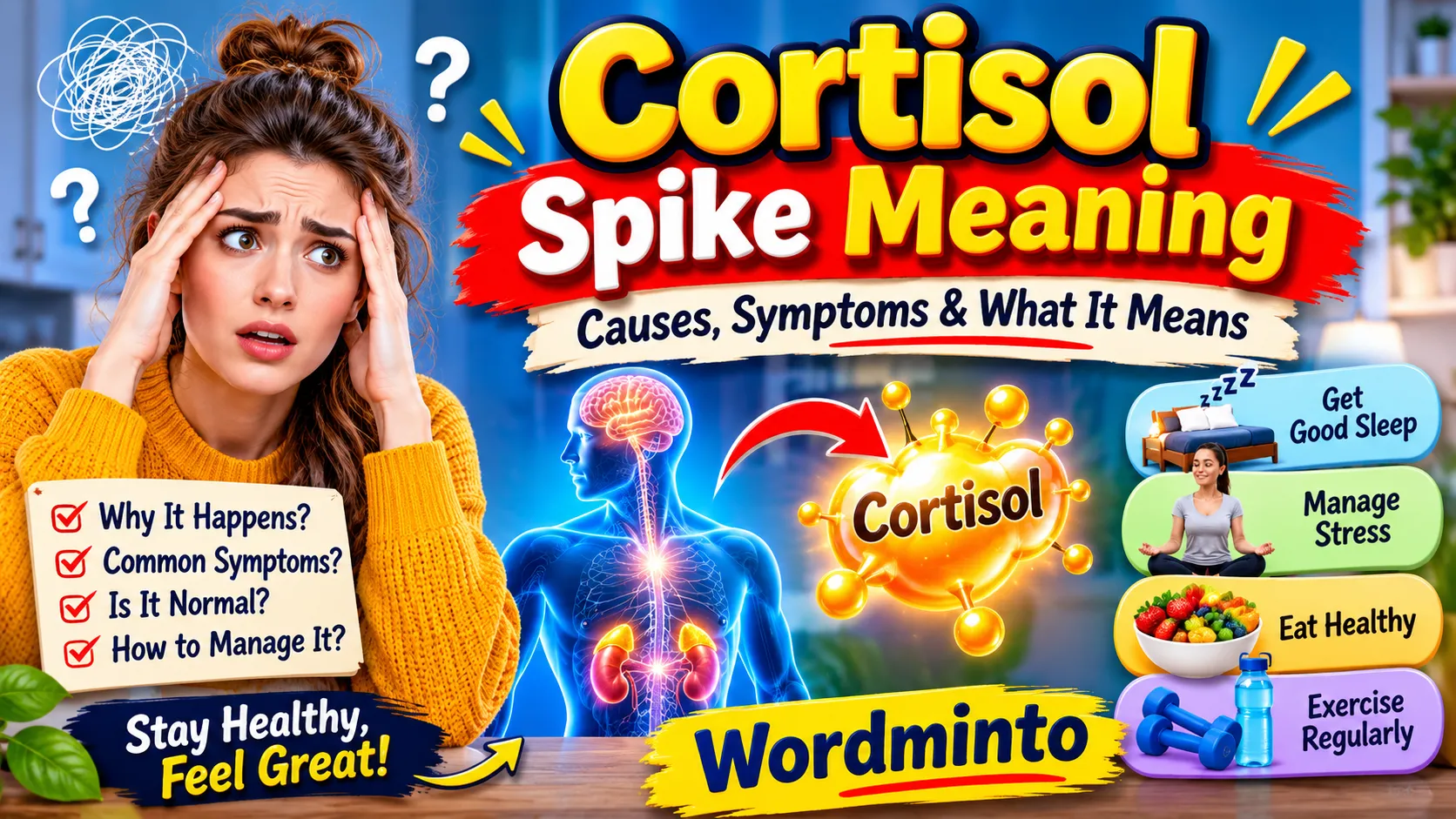
Cortisol Spike Meaning: Have you ever heard someone say, “My cortisol is spiking,” or seen social media posts warning about cortisol spikes caused by stress, poor sleep, or morning coffee? The phrase has become increasingly common in conversations about stress, hormones, fitness, and wellness.
A cortisol spike refers to a sudden or temporary increase in cortisol levels in the body. Cortisol is a hormone produced by the adrenal glands that helps regulate stress responses, blood sugar, metabolism, blood pressure, and the sleep-wake cycle.
A cortisol spike is not always a bad thing. Your body naturally releases more cortisol in the morning and during stressful situations to help you stay alert and respond to challenges.
In this guide, you’ll learn what a cortisol spike means, why it happens, what symptoms people associate with it, how it affects the body, and what you can do to maintain healthy cortisol levels.
What Does Cortisol Spike Mean?
A cortisol spike means a temporary rise in the amount of cortisol circulating in your body.
Cortisol is often called the stress hormone because it plays an important role in your body’s response to physical and emotional pressure. When you experience stress, your brain activates a system called the hypothalamic-pituitary-adrenal (HPA) axis, which signals your adrenal glands to release cortisol.
This hormone helps your body:
- Increase available energy during stressful situations.
- Regulate blood sugar levels.
- Maintain healthy blood pressure.
- Control inflammation.
- Support alertness and daily activity.
- Respond to physical and emotional challenges.
For example, imagine you have an important presentation at work. Your body may release additional cortisol to help you stay alert and prepare for the situation. This temporary increase is a normal part of the stress response.
According to Cleveland Clinic, cortisol also plays an essential role in metabolism, immune function, and the body’s sleep-wake cycle.
What Is Cortisol?
Cortisol is a steroid hormone produced by the adrenal glands, which sit above your kidneys.
It belongs to a group of hormones called glucocorticoids. These hormones help regulate several important processes throughout the body.
Although cortisol is commonly associated with stress, it is necessary for everyday health.
Your body naturally produces cortisol throughout the day. Levels generally rise during the early morning hours and gradually decrease toward the evening.
This daily pattern helps regulate your energy, alertness, and sleep schedule.
Is a Cortisol Spike Normal?
Yes, a temporary cortisol spike is completely normal in many situations.
Your body needs cortisol to respond to everyday activities and challenges. Levels naturally fluctuate depending on the time of day, physical activity, sleep patterns, and stress.
One common example is the cortisol awakening response (CAR).
This refers to a rapid increase in cortisol levels during approximately the first 30 to 45 minutes after waking up. Researchers believe this response helps prepare the body for the demands of the day.
A temporary increase does not automatically indicate a health problem. Persistent abnormal cortisol levels, however, may require medical evaluation.
What Causes a Cortisol Spike?
Several physical, emotional, and environmental factors can contribute to a temporary increase in cortisol.
Here are some common causes:
1. Stress and Anxiety
Emotional stress is one of the best-known triggers of cortisol release.
When you experience anxiety, work pressure, financial concerns, or relationship problems, your brain may activate the body’s stress response.
This process signals your adrenal glands to release cortisol.
For example, worrying about an upcoming examination or an important meeting may temporarily increase cortisol levels.
2. Poor Sleep
Sleep plays an important role in regulating cortisol production.
Your cortisol levels normally follow a daily rhythm that supports waking during the morning and resting at night.
Irregular sleep schedules, insufficient sleep, and disrupted sleep patterns can interfere with this rhythm.
3. Intense Physical Exercise
Exercise is beneficial for overall health, but demanding physical activity can temporarily increase cortisol.
High-intensity workouts, endurance training, and physically exhausting activities may activate the body’s stress response.
This is a normal physiological reaction that helps mobilize energy for physical performance.
4. Illness or Infection
When your body fights an infection or deals with an injury, cortisol helps regulate inflammation and supports the stress response.
As a result, physical illness can temporarily affect cortisol production.
5. Morning Awakening
Cortisol naturally rises during the early morning hours.
The increase around waking is known as the cortisol awakening response.
It helps prepare your body for daytime activity and is a normal part of the body’s biological rhythm.
6. Certain Medications
Some medications can affect cortisol levels.
For example, corticosteroid medicines such as prednisone and dexamethasone act like cortisol in the body. Long-term use of these medications can also affect the body’s natural cortisol production.
Never stop prescribed corticosteroids without medical guidance.
What Are the Symptoms of a Cortisol Spike?
A temporary cortisol increase does not always cause noticeable symptoms.
However, when your body activates its stress response, you may experience physical or emotional changes.
Common experiences associated with stress include:
- Increased heart rate.
- Feeling nervous or anxious.
- Sweating.
- Muscle tension.
- Difficulty relaxing.
- Temporary changes in appetite.
- Feeling more alert.
- Trouble concentrating.
These experiences do not prove that your cortisol levels are elevated. Many other physical and psychological factors can cause similar symptoms.
Important: Persistent high cortisol is different from a short-term cortisol spike. Long-term excessive cortisol can cause more specific health changes, including weight gain around the abdomen and face, high blood pressure, high blood sugar, muscle weakness, and wide purple stretch marks.
What Happens When Cortisol Spikes?
When cortisol levels temporarily increase, your body makes several adjustments to help you respond to a situation.
Here is what happens:
- The brain detects stress: Your brain recognizes a physical or emotional challenge.
- The HPA axis activates: The hypothalamus signals the pituitary gland.
- The adrenal glands respond: The pituitary releases ACTH, which stimulates the adrenal glands.
- Cortisol enters the bloodstream: Your body releases cortisol to help manage the situation.
- Energy becomes available: Cortisol helps increase available glucose for energy.
- The body regulates the response: As the challenge passes, feedback mechanisms help bring cortisol production back toward its usual pattern.
This process is an important part of the body’s natural stress-management system.
Cortisol Spike vs High Cortisol
People sometimes use these expressions interchangeably, but they do not mean exactly the same thing.
| Cortisol Spike | High Cortisol |
| A temporary increase in cortisol levels. | Cortisol levels remain abnormally elevated or show an abnormal pattern. |
| Can happen during normal daily activities. | May indicate an underlying medical condition. |
| Often occurs during stress or morning awakening. | Can result from Cushing syndrome or certain medications. |
| Usually part of a normal physiological response. | May require medical investigation. |
| Does not automatically indicate a health problem. | Can cause health complications when persistent. |
A single temporary increase should not be confused with a medical condition involving excessive cortisol production.
Manage Cortisol Levels Naturally?
You cannot and should not eliminate cortisol because your body needs this hormone to function properly.
Instead, focus on supporting healthy sleep, managing stress, and maintaining balanced daily habits.
Here are some practical approaches:
1. Maintain a Regular Sleep Schedule
Try to go to bed and wake up at consistent times.
A regular sleep routine supports your body’s natural circadian rhythm and helps maintain a healthy cortisol pattern.
2. Exercise Regularly
Moderate physical activity can support physical and mental well-being.
Consider activities such as:
- Walking.
- Swimming.
- Cycling.
- Yoga.
- Light strength training.
Allow enough recovery time after demanding workouts.
3. Practice Stress Management
Relaxation techniques can help you manage everyday stress.
You can try:
- Deep breathing exercises.
- Meditation.
- Mindfulness.
- Spending time outdoors.
- Listening to relaxing music.
These activities may help reduce perceived stress and improve emotional well-being.
4. Eat a Balanced Diet
A balanced diet provides the nutrients your body needs for normal hormonal function.
Include vegetables, fruits, whole grains, lean proteins, and healthy fats in your regular meals.
Avoid relying on extreme diets or unverified cortisol-lowering supplements.
5. Limit Excessive Caffeine
Caffeine can increase alertness and may temporarily affect cortisol responses in some circumstances.
If caffeine makes you feel anxious or interferes with your sleep, consider reducing your intake or avoiding it later in the day.
6. Make Time for Recovery
Constantly pushing yourself without adequate rest can increase physical and emotional strain.
Take breaks, maintain reasonable workloads, and give your body enough time to recover after exercise and stressful activities.
When Should You Be Concerned About a Cortisol Spike?
An occasional cortisol increase is generally a normal part of human physiology.
However, you should speak with a healthcare professional if you experience persistent symptoms that could suggest an abnormal cortisol level.
Some warning signs of prolonged excessive cortisol include:
- Unexplained weight gain, particularly around the abdomen and face.
- Wide purple stretch marks.
- Muscle weakness in the upper arms and thighs.
- High blood pressure.
- High blood sugar.
- Easy bruising.
- Changes in bone strength.
These symptoms can occur with Cushing syndrome, a condition involving prolonged exposure to excessive cortisol.
A healthcare professional can determine whether cortisol testing is appropriate. Depending on the situation, testing may involve saliva, blood, or urine samples.
Common Mistakes People Make About Cortisol Spikes
People often misunderstand how cortisol works, especially when they encounter health advice on social media.
Here are some common misconceptions:
| Misconception | Correct Explanation |
| Every cortisol spike is harmful. | Temporary cortisol increases are normal and necessary. |
| Cortisol is always bad. | Cortisol supports metabolism, immunity, blood pressure, and stress responses. |
| Morning cortisol increases indicate a health problem. | Morning increases are part of normal daily hormone patterns. |
| Anxiety always means high cortisol. | Anxiety has several possible causes and cannot diagnose cortisol levels. |
| You should eliminate cortisol. | Your body needs cortisol to function properly. |
| One symptom proves high cortisol. | Symptoms alone cannot confirm abnormal cortisol levels. |
Understanding these differences can help you avoid unnecessary health concerns.
Examples of Cortisol Spikes in Everyday Conversations
People commonly use the phrase cortisol spike when discussing stress, exercise, sleep, and wellness.
Here are some examples:
1:
“My cortisol spikes whenever I have too much work.”
Meaning: The person believes work-related stress causes their cortisol levels to increase.
2:
“Getting enough sleep helps me manage my cortisol spikes.”
Meaning: The person is discussing the relationship between sleep and stress regulation.
3:
“An intense workout can cause a temporary cortisol spike.”
Meaning: Demanding physical activity can temporarily increase cortisol production.
4:
“I read that cortisol spikes in the morning are normal.”
Meaning: The person is referring to the body’s natural morning cortisol increase.
5:
“Social media makes every cortisol spike sound dangerous.”
Meaning: The person believes online discussions exaggerate the risks associated with normal cortisol fluctuations.
Is Cortisol Spike a Medical Term or Internet Slang?
Cortisol Spike is an informal expression used in health, fitness, and wellness discussions.
The word spike describes a sudden increase, while cortisol refers to the hormone responsible for several important bodily functions.
Medical professionals may use more specific terminology, such as cortisol elevation, increased cortisol secretion, or cortisol awakening response, depending on the situation.
On social media platforms such as TikTok and Instagram, people frequently use the phrase when discussing stress, weight management, morning routines, and hormonal health.
However, an online post or personal experience cannot establish whether someone has medically elevated cortisol.
Related Terms and Expressions
Here are some related terms that can help you understand conversations about cortisol and hormonal health.
| Term | Meaning |
| Cortisol | A hormone that helps regulate stress and metabolism. |
| Stress Response | The body’s reaction to a challenging or threatening situation. |
| Adrenal Glands | Small glands located above the kidneys that produce cortisol. |
| HPA Axis | The system connecting the hypothalamus, pituitary gland, and adrenal glands. |
| Cortisol Awakening Response | The rise in cortisol during the first 30–45 minutes after waking. |
| Chronic Stress | Stress that continues over an extended period. |
| Cushing Syndrome | A condition caused by prolonged exposure to excessive cortisol. |
| Circadian Rhythm | The body’s internal approximately 24-hour biological cycle. |
People Also Ask
A cortisol spike means a temporary increase in cortisol levels in the body. It can happen during stressful situations, physical exercise, illness, or normal morning hormone changes.
No, not necessarily. Temporary cortisol increases are normal and help your body respond to everyday challenges. Persistently abnormal cortisol levels may require medical attention.
Common triggers include emotional stress, intense exercise, illness, pain, and changes in sleep patterns. Cortisol also naturally increases during the early morning hours.
A temporary increase may occur without noticeable symptoms. Stress-related experiences can include sweating, nervousness, increased alertness, muscle tension, and a faster heartbeat. These symptoms do not confirm elevated cortisol.
You can support healthy cortisol regulation through regular sleep, moderate exercise, balanced nutrition, stress-management techniques, and adequate recovery time.
Conclusion
Understanding Cortisol Spike Meaning helps you recognize how your body responds to stress, physical activity, and everyday challenges.
A cortisol spike refers to a temporary increase in cortisol levels, which is often a normal physiological response. Your body needs this hormone to regulate energy, metabolism, blood pressure, and its natural stress response.
Rather than trying to eliminate cortisol, focus on healthy daily habits, adequate sleep, regular exercise, and effective stress management. If you experience persistent symptoms associated with excessive cortisol, consult a healthcare professional for proper evaluation.











1 thought on “Cortisol Spike Meaning: What Does a Cortisol Spike Mean?”